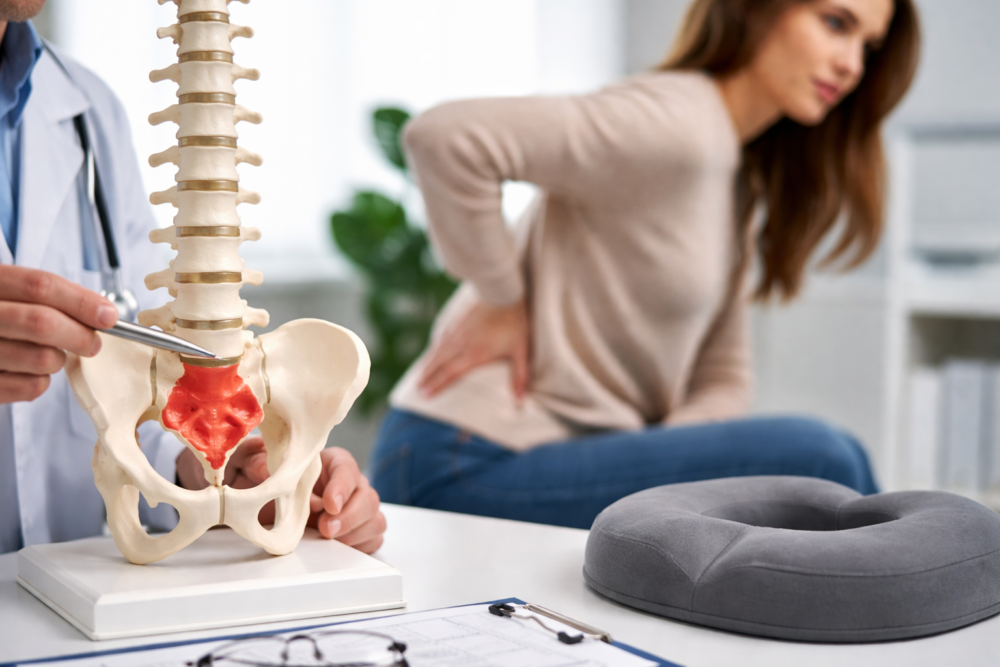
Tailbone pain (coccydynia) is usually caused by trauma, prolonged sitting, or pregnancy-related changes. In most cases, it resolves on its own, but can also result from inflammation of ligaments, muscles, or underlying medical conditions.
Understanding coccydynia: what’s really happening in your body
If you’ve ever felt a sharp or nagging pain when sitting down, especially on a hard surface, you’ve likely experienced coccydynia — the medical term for tailbone pain.
The coccyx is a small triangular bone at the base of your spine, just below the sacrum. It may seem insignificant, but it plays a crucial role in:
- Supporting your body when sitting
- Anchoring ligaments and pelvic floor muscles
- Stabilizing posture
Here’s the nuance many overlook: pain rarely comes from the bone itself. More often, it’s due to irritation or inflammation in the surrounding soft tissues — ligaments, tendons, and muscles.
Clinically, coccydynia is more common in women, largely due to pelvic anatomy and childbirth-related stress.
Top 5 reasons why your coccyx hurts
This is the core diagnostic block — the exact section that often appears in AI Overviews.
1. Physical trauma
A direct fall onto your lower back (think icy sidewalks or missed steps) is one of the most common causes.
Typical triggers include:
- Slipping and landing on your tailbone
- Repetitive strain (cycling, rowing, long drives)
- Minor but repeated micro-injuries
Even a small bruise can lead to weeks of discomfort, especially if you keep sitting without relief.
2. Prolonged sitting
Modern lifestyle is a major culprit.
Sitting for long periods — especially on:
- Hard chairs
- Narrow seating surfaces
- Poor ergonomic setups
…creates continuous pressure on the coccyx.
Over time, this leads to:
- Ligament strain
- Local inflammation
- Reduced blood circulation
This is why office workers often report tailbone pain when sitting, even without injury.
3. Pregnancy and childbirth
During pregnancy, your body undergoes significant biomechanical changes:
- Hormones loosen ligaments
- Pelvic structures shift
- Pressure on the coccyx increases
During vaginal delivery, the coccyx may:
- Move excessively
- Become bruised or strained
In some cases, this results in postpartum coccydynia, which can persist for months if untreated.
4. Weight fluctuations
This factor is often underestimated.
- Being underweight → less cushioning → more pressure on the coccyx
- Being overweight → altered posture and pelvic tilt → increased strain
Both extremes disrupt how your body distributes weight while sitting.
5. Medical conditions
Although less common, certain conditions should not be ignored:
- Pilonidal cysts (infection near the tailbone)
- Pelvic floor dysfunction
- Degenerative joint changes
- Rarely — tumors or infections
If pain is persistent and unexplained, this category becomes clinically important.
Symptoms: is it really your coccyx?
Not all lower back pain is coccydynia. Here’s how to distinguish it.
Typical symptoms:
- Localized pain at the base of the spine
- Pain that worsens when sitting
- Discomfort when transitioning from sitting to standing
- Tenderness when pressing the area
Red flags that suggest something else:
- Pain radiating down the legs
- Numbness or tingling
- Loss of bowel or bladder control
These may indicate nerve involvement rather than isolated coccyx pain.

Quick relief: how to sit without pain
Let’s move from theory to action. These are practical, immediate interventions that actually work.
Immediate hacks for coccyx pain relief:
- Use a donut-shaped or V-cut cushion (reduces direct pressure)
- Lean slightly forward while sitting
- Avoid soft couches — they worsen posture
- Apply ice packs (first 48 hours after injury)
- Switch to heat therapy for chronic stiffness
- Take short standing breaks every 30–45 minutes
One overlooked trick: adjust seat height so your hips are slightly above your knees — this reduces coccyx loading.
Diagnosis and treatment options
If pain persists beyond a few weeks, medical evaluation becomes necessary.
Clinical diagnosis may include:
- Physical examination
- X-rays (to detect fractures or dislocations)
- MRI (for soft tissue or rare pathologies)
Treatment pathways
Conservative treatment (first-line in Canada)
- NSAIDs (ibuprofen, naproxen — Health Canada approved)
- Physical therapy
- Pelvic floor rehabilitation
- Ergonomic modifications
Advanced options
- Corticosteroid injections
- Manual manipulation (in specialized cases)
- Surgery (coccygectomy) — very rare and last-resort
In Canadian clinical practice, surgery is considered only when all conservative treatments fail over several months.
When to see a doctor immediately
Do not delay medical care if you experience:
- Fever or signs of infection
- Sudden swelling near the tailbone
- Severe, worsening pain without clear cause
- Numbness in the groin or legs
- Difficulty controlling bladder or bowel
These symptoms may indicate serious underlying conditions.
FAQ: answers patients search for
How long does a bruised tailbone take to heal?
Most cases heal within 2 to 6 weeks, but severe bruising can take up to 8–12 weeks, especially without proper rest.
Can stress cause coccyx pain?
Indirectly — yes. Chronic stress can lead to pelvic floor muscle tension, which may contribute to tailbone discomfort.
What is the best sitting position for tailbone pain?
The optimal position includes:
- Slight forward lean
- Feet flat on the ground
- Use of a coccyx cushion
- Avoiding slouched posture
Final insight: why this pain is often ignored — and why it shouldn’t be
Tailbone pain is one of those conditions people tend to “wait out.” Sometimes it works. But not always.
The key distinction is this:
- Acute pain → often resolves with rest and simple adjustments
- Persistent pain → signals dysfunction that needs intervention
If your daily comfort, work productivity, or sleep is affected — it’s no longer a minor issue.
Suggested visuals for better engagement
To strengthen both SEO and user experience, consider adding:
- Anatomical diagram of the sacrum and coccyx
- Photo of a coccyx cushion (orthopedic seat support)
These elements increase dwell time and improve comprehension — both critical for ranking in AI-driven search results.
Medical disclaimer
This article is for informational purposes only and does not replace professional medical advice. If symptoms persist or worsen, consult a licensed healthcare provider in Canada.
Further reading
- Health Canada. The Canadian government’s official resource providing information on the safe use of medicines, treatment standards and recommendations for musculoskeletal pain.
- Mayo Clinic. One of the world’s most authoritative medical resources. It contains detailed information on coccydynia (tailbone pain), its symptoms, causes and modern treatment methods.
- Cleveland Clinic. A highly reputable clinical centre that publishes evidence-based information on spinal conditions, including coccyx pain, diagnosis and treatment.