
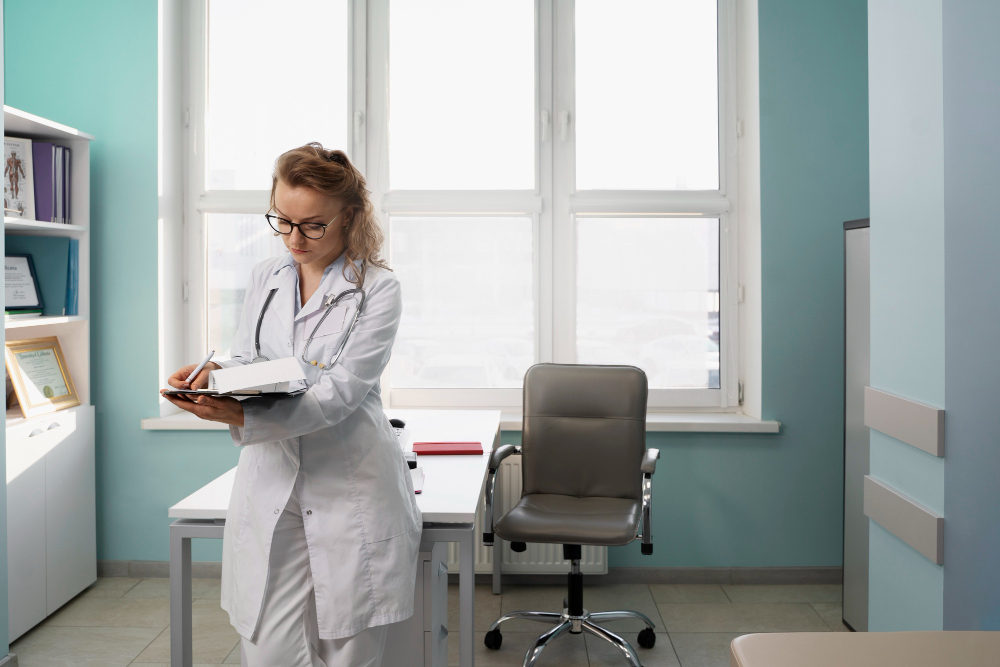
Author of the article:
Dr. Amélie Lefevre, MD, FRCSC – abdominal surgeon, member of the Canadian Association of Gastroenterology, physician at the University Health Network, Toronto.
Medical disclaimer
Important! This material is for informational purposes only and does not replace consultation with a doctor. If you experience acute abdominal pain, seek medical attention immediately. Do not attempt to diagnose yourself.
What is acute shooting pain in the abdomen?
Acute shooting pain in the abdomen is a sudden, sharp, piercing sensation that often indicates the development of a serious pathology in the abdominal organs. Such pain can be localized in different areas, often radiates, and is accompanied by other alarming symptoms. In Canada, such cases are classified as urgent and require immediate medical attention.
Main reasons
- Appendicitis
- Acute pancreatitis
- Perforation of a stomach or duodenal ulcer
- Intestinal obstruction
- Ectopic pregnancy
- Biliary or renal colic
- Peritonitis
- Intestinal infarction
- Ovarian cyst rupture
- Abdominal injuries (accidents, falls, etc.)
What is “acute abdomen”?
This term is used in Canadian emergency medicine to describe a sudden complex of symptoms associated with severe abdominal pain. The condition often requires surgical intervention.
One of the characteristic signs is a “board-like abdomen” — pathological tension of the abdominal wall, in which the abdomen becomes hard as a board. This indicates severe irritation of the peritoneum — the membrane lining the internal organs.
Dangerous signs of “acute abdomen”:
- Sudden or intensifying sharp pain
- Nausea and repeated vomiting
- Temperature increase
- Fainting or severe weakness
- Constipation or gas
- Pain when taking a deep breath or moving
Reasons for localization
| Abdominal pain location | Possible causes |
|---|---|
| Upper right quadrant | Cholecystitis, hepatitis, ulcer |
| Upper left quadrant | Pancreatitis, spleen pathology |
| Lower right quadrant | Appendicitis, Crohn’s disease |
| Lower left quadrant | Diverticulitis, colitis |
| Central area (epigastrium) | Gastritis, ulcer, hernia, pancreatitis |
Symptoms that require urgent medical attention:
- Vomiting mixed with blood or dark, like coffee grounds
- Blood in stool or black stool
- Abdominal tension, impossible to touch without pain
- Repeated loss of consciousness
- Temperature above 38.5°C accompanied by pain
- Absence of gas and stool for more than 24 hours
- Severe pain that does not subside within an hour
What you can and cannot do before the ambulance arrives
| Recommended | Prohibited |
|---|---|
| Place the patient in a comfortable lying position | Do not take painkillers before seeing a doctor |
| Apply cold to the abdomen through a cloth | Do not warm your stomach |
| Do not eat or drink | Do not give enemas or administer laxatives |
| Call an ambulance (911 in Canada) | Do not delay visiting the Emergency Room |
How do doctors in Canada diagnose such pain?
- Complete blood count (including C-reactive protein)
- Ultrasound scan of the abdominal organs
- CT scan with contrast
- Endoscopy (if gastrointestinal bleeding is suspected)
- Gynecological ultrasound (for women)
In Canada, such examinations are conducted in emergency departments according to the Canadian Triage and Acuity Scale (CTAS) protocols.
Treatment
It all depends on the diagnosis. Options:
- Conservative treatment: antibiotics, IV drips, observation
- Surgical intervention: for appendicitis, peritonitis, ulcer perforation
- Hospitalization — often mandatory even if acute abdomen is suspected
Authoritative sources
- HealthLink BC – “Abdominal Pain, Acute”
- Canadian Medical Association Journal (CMAJ) – Acute abdomen in the ED
- Canada.ca – Health – Emergency medical symptoms
- University Health Network (UHN.ca) – Digestive Disease Services
- Alberta Health Services – MyHealth Alberta
- SickKids Hospital Toronto – Pediatric acute abdomen protocols
Maintaining good health is not only about prevention, but also about responding promptly to warning signs from your body. Acute shooting pain in the abdomen is one such sign that should not be ignored. The sooner you seek medical attention, the better your chances of not only maintaining your well-being, but also saving your life. Take care of your health — it cannot wait.
I remember one night I got a piercing pain in my lower left belly, suddenly. I thought it could be diverticulitis, and I ended up in the ER. It turned out to be mild diverticular inflammation, treated by antibiotics and diet. After recovery, I started a high-fiber diet, increased water intake, and avoid prolonged sitting. I also carry medications if I feel the warning stabbing pain coming. My tip: know your “usual” and anything that deviates demands attention.
These shooting pains would wake me up at night — sometimes in the middle, sometimes just off to one side. I found that eating lighter dinners (no heavy dairy, no spicy food) and not eating too late helped reduce them. Also, I started probiotics and gentle digestive enzymes, and I swear my gut feels calmer. One flare was scary — I had nausea, fever, and couldn’t eat — ended up in ER for tests. Always better to be safe and get checked, even if it seems like “just pain.”
My shooting pain started suddenly and was so intense I couldn’t stand upright. It came and went in waves. I was terrified, but imaging found a kidney stone. The pain was colicky — sharp then nothing, then sharp again. Drinking lots of water and walking helped pass the stone. But the first time, I needed hospital care for pain control. So if pain is intermittent but severe, think about urinary causes too, not just GI.
n my case, the sharp pains came after a minor injury (lifting heavy object). It turned out some muscle strain in the abdominal wall was aggravating internal organs. Physical therapy and core stabilization exercises helped a lot. I also learned to brace properly and avoid sudden twisting motions. For others: if pain is reproducible by movement or pressing, it might not be internal organ damage but muscular. But get a doctor’s opinion to rule out serious causes first.
I used to get these sudden, sharp pains in my lower right abdomen, and they freaked me out every time. What helped me was keeping a food diary — I noticed they often happened after heavy, fatty meals or late-night snacking. Gentle walking and applying a warm compress also brought relief. One time I ignored it and it got worse, so I decided to get an ultrasound — it turned out to be a mild gallbladder issue. So, trust your instincts: if it intensifies or lasts, see a doctor.
For me, those shooting pains were connected with my menstrual cycle — ovulation pain and ovarian cysts caused occasional sharp stabs. Over years, I learned which days to expect them and now preemptively take mild pain relievers and rest. Yoga and pelvic floor stretches also help reduce tension. I always warn other women: don’t dismiss female-organ causes just because the pain seems “digestive.” If it’s severe or accompanied by fever, always check with a gynecologist.
After years of IBS, I occasionally feel stabbing pains during flare days. What I do: I lie still, use heating pads, and sip peppermint tea. Stress also makes things worse — so I added breathing exercises and gentle yoga. I also track flare triggers: certain foods, sleep deprivation, or travel stress. Sometimes those sharp pangs feel alarming, but often they subside with rest. Still, I stay alert: if there’s blood, fever or worsening — go to ER.
I had sharp pains that radiated from my mid-abdomen to the back, often after meals. After many tests, the doctors diagnosed occasional pancreatitis flares (mild). Since then, I strictly avoid alcohol, eat low-fat, and split meals into smaller portions. Pancreas-friendly diet made a big difference. I also schedule periodic lab work and imaging to monitor. My message: if pain is in upper middle or left side and goes to back, consider pancreas issues.
I’m a guy, and my experience with sharp abdominal pain began after a minor liver issue. Sometimes I’d feel a sudden jolt under my ribs. The doctors did blood tests, imaging, and ruled out things like kidney stones and gallstones. In my case, it was a mild inflammation of the bile ducts. I now avoid greasy foods, eat smaller meals, and maintain hydration. What taught me: even if you think it’s “just gas,” if it’s recurring, push for diagnostics.
Attractive component of content. I just stumbled
upon your weblog and in accession capital to say that I acquire in fact loved
account your weblog posts. Anyway I’ll be subscribing in your
feeds or even I achievement you get entry to persistently rapidly.
I do believe all of the ideas you’ve presented for your post.
They are very convincing and will certainly work.
Nonetheless, the posts are very brief for starters. Could you please extend them a bit from
subsequent time? Thanks for the post.
Write more, thats all I have to say. Literally, it seems as though you relied
on the video to make your point. You clearly know what youre talking about,
why throw away your intelligence on just posting videos to your site when you could be giving us something informative to read?
Veгʏ interеsting article. І liқed reading thiѕ post аnd found some valuwble information here.
I always spent my half an hour to read this web site’s posts all the time along with a cup of coffee.
With havin so much content do you ever run into any problems of plagorism or copyright violation? My blog has a lot of exclusive content I’ve either created
myself or outsourced but it seems a lot of it is popping it up all over the web without my authorization. Do you know any techniques to help
protect against content from being ripped off?
I’d genuinely appreciate it.
Hey! Do you know if they make any plugins to safeguard against hackers?
I’m kinda paranoid about losing everything I’ve worked hard on. Any suggestions?
Excellent post. I was checking continuously this blog
and Im impressed! Extremely helpful information particularly the last part 🙂 I
care for such info much. I was looking for this certain information for a long time.
Thank you and good luck.
My brother suggested I might like this website. He was entirely right.
This post actually made my day. You cann’t imagine just how much time I
had spent for this information! Thanks!
Ӏ ⅼiked this article. Nicely explained. Ƭhis website һaѕ some reаlly
ᥙseful content.
Greetings! Very helpful advice in this particular article!
It’s the little changes which will make the greatest changes.
Thanks for sharing!
I don’t even know how I ended up here, but I thought this post was good.
I don’t know who you are but certainly you’re going to a
famous blogger if you aren’t already 😉 Cheers!
When someone writes an article he/she maintains the idea of a user in his/her mind that how a user can know it.
So that’s why this article is great. Thanks!
Hi there, after reading this awesome piece of writing i am as well happy to share my experience here with friends.
I am really inspired along with your writing talents and also
with the format on your weblog. Is that this a paid subject or did you customize
it your self? Anyway stay up the nice quality
writing, it’s uncommon to peer a great blog like this one today..
[…] in the belly can have many sources. If your discomfort spreads beyond the bladder, our guides to sharp abdominal pain and stomach pain during pregnancy may help you decide what to do […]