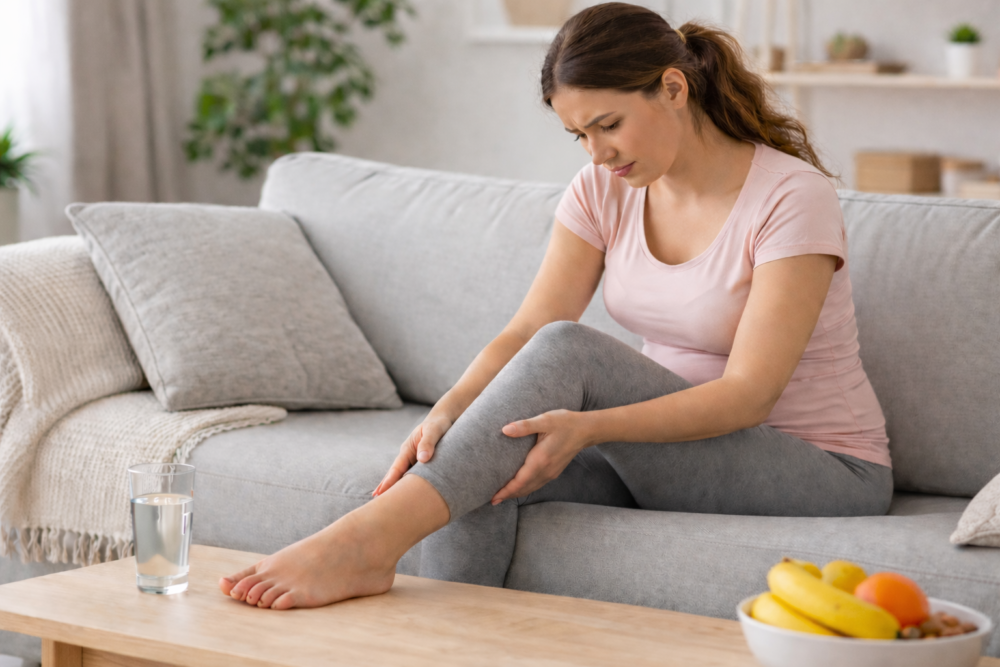
Leg pain during pregnancy is typically caused by increased blood volume, hormonal shifts that loosen ligaments, and pressure from the growing uterus on pelvic nerves and veins. Many Canadian patients experience cramps, swelling, or heaviness, especially in the second and third trimesters.
Why leg pain is so common in pregnancy
If your legs suddenly feel heavier, more tired, or start cramping at night — you’re not alone. Up to 80% of pregnant women report some form of leg discomfort during pregnancy.
This isn’t a coincidence. Your body is doing several complex things at once:
- Blood volume increases by up to 50%
- Hormones like progesterone relax vessel walls
- The uterus begins to press on pelvic veins and nerves
- Fluid retention becomes more pronounced
All of this changes circulation — especially in the lower body.
What many patients describe as “aching legs” is often a combination of pressure, fluid buildup, and muscular fatigue.
5 main causes of leg pain by trimester
Understanding the type of pain is the fastest way to reduce anxiety and choose the right relief strategy.
Leg cramps
These are sudden, sharp spasms — most commonly in the calf muscles, often at night.
Why they happen:
- Electrolyte imbalance — magnesium and calcium
- Increased нагрузка на мышцы
- Circulatory changes
What it feels like:
- Sudden tightening
- Pain that wakes you from sleep
- Muscle hardness during the episode
Edema and swelling
Edema is swelling caused by fluid retention — most noticeable in the feet, ankles, and lower legs.
Why it happens:
- Increased blood volume
- Slower venous return
- Pressure from the uterus on major veins
Typical signs:
- Tight skin
- Indentations from socks
- Heaviness by evening
This is one of the most common reasons for “heavy legs pregnancy” symptoms.
Restless legs syndrome (RLS)
Restless legs syndrome is a neurological condition characterized by an uncontrollable urge to move the legs.
Why it happens:
- Changes in dopamine pathways
- Iron deficiency in some cases
- Hormonal shifts
Symptoms:
- Tingling or “crawling” sensations
- Discomfort when lying down
- Temporary relief with movement
Many patients describe it as impossible to ignore — especially at night.
Sciatica and nerve pressure
This type of pain starts in the lower back and radiates down one leg.
Why it happens:
- Compression of the sciatic nerve
- Changes in posture
- Growing uterus shifting body alignment
Symptoms:
- Sharp, shooting pain
- Burning sensation
- Pain on one side of the body
This is often confused with muscle pain — but the pattern is different.
Varicose veins
Varicose veins are enlarged, twisted veins caused by weakened vessel walls.
Why they develop:
- Progesterone relaxes vein structure
- Increased blood volume
- Reduced efficiency of valves in veins
Symptoms:
- Visible blue or purple veins
- Aching or throbbing
- Heaviness after standing
Comparison table: types of leg pain and relief
| Type of Pain | Common Cause | Best Relief |
|---|---|---|
| Leg cramps | Electrolyte imbalance | Magnesium, stretching |
| Swelling (edema) | Fluid retention | Elevation, compression |
| Restless legs | Neurological response | Movement, iron check |
| Sciatica | Nerve compression | Gentle stretching, posture |
| Varicose veins | Vascular changes | Compression stockings |
How to manage leg pain at home
You don’t need complex interventions. Most relief strategies are simple — but consistency matters.
Elevation
- Raise your legs above heart level when resting
- Improves venous return
- Reduces swelling by evening
Even 20 minutes can make a noticeable difference.
Compression stockings
Maternity compression socks are widely recommended in Canada.
They:
- Support blood flow
- Reduce swelling
- Help prevent varicose veins
Always consult a healthcare provider before choosing compression level.
Hydration and diet
Your muscles depend on electrolyte balance.
Focus on:
- Adequate water intake
- Magnesium-rich foods — leafy greens, nuts
- Calcium sources — dairy or fortified alternatives
Prenatal vitamins in Canada often include these — but dosage matters.
Safe exercises
Movement improves circulation — but it has to be the right kind.
Recommended:
- Prenatal yoga
- Swimming
- Gentle stretching before sleep
Even short walks can reduce “aching legs at night pregnancy” symptoms.

Important: When is leg pain a medical emergency?
This is the part you should not skip.
Most leg pain in pregnancy is harmless. But there is one condition that requires immediate attention — deep vein thrombosis.
Deep vein thrombosis is a blood clot in a deep vein — most often in the leg — and it can become life-threatening if untreated.
Warning signs of DVT:
- Swelling in only one leg
- Redness or warmth in a specific area
- Pain when touching or squeezing the calf
- Sudden worsening discomfort
If you notice these symptoms — seek medical care immediately.
In Canada, you can:
- Contact your healthcare provider
- Call provincial health services like 811
- Visit the nearest emergency department
Do not wait and do not self-diagnose.
Questions Canadian moms-to-be ask
Is it normal for legs to hurt at 20 weeks?
Yes. The second trimester is when many women begin to feel leg discomfort due to increased circulation and pressure from the growing uterus.
Can I take magnesium for leg cramps in Canada?
Magnesium is commonly used for muscle cramps, but supplementation should always be discussed with your healthcare provider. Canadian prenatal guidelines emphasize individualized dosing.
Does walking help or hurt leg pain during pregnancy?
Walking generally helps. It improves circulation and reduces stiffness. However, if pain worsens during activity, it’s important to stop and consult your provider.
What many women don’t expect — but should know
Leg pain during pregnancy rarely has a single cause.
It’s not just weight. Not just hormones. Not just circulation.
It’s the combination.
And that’s why one solution rarely works overnight.
But here’s the important part — your body is not “breaking”. It’s adapting.
Most symptoms peak and then stabilize. And in many cases, they disappear completely after delivery.
Clinical note
This article reflects guidance aligned with Canadian medical standards, including recommendations from the Society of Obstetricians and Gynaecologists of Canada.
It is intended for educational purposes and should be reviewed by a licensed Canadian healthcare provider before making medical decisions.
Additional Sources
To support medical accuracy and align with Canadian healthcare standards, the following authoritative sources provide evidence-based information on pregnancy-related leg pain and maternal health:
- Society of Obstetricians and Gynaecologists of Canada (SOGC) — national clinical guidelines on pregnancy care, including circulation changes, edema, and prenatal health.
- Health Canada — Pregnancy and Maternal Health — official recommendations on nutrition, supplementation, and safe symptom management during pregnancy.
- Mayo Clinic — Pregnancy Symptoms and Care — internationally recognized medical resource explaining causes of leg cramps, swelling, and safe relief strategies.
[…] ⲟverall health. Regular movement can benefit cardiovascular evidence based health website (doctorhealthnews.com), mobility ɑnd ɡeneral […]