
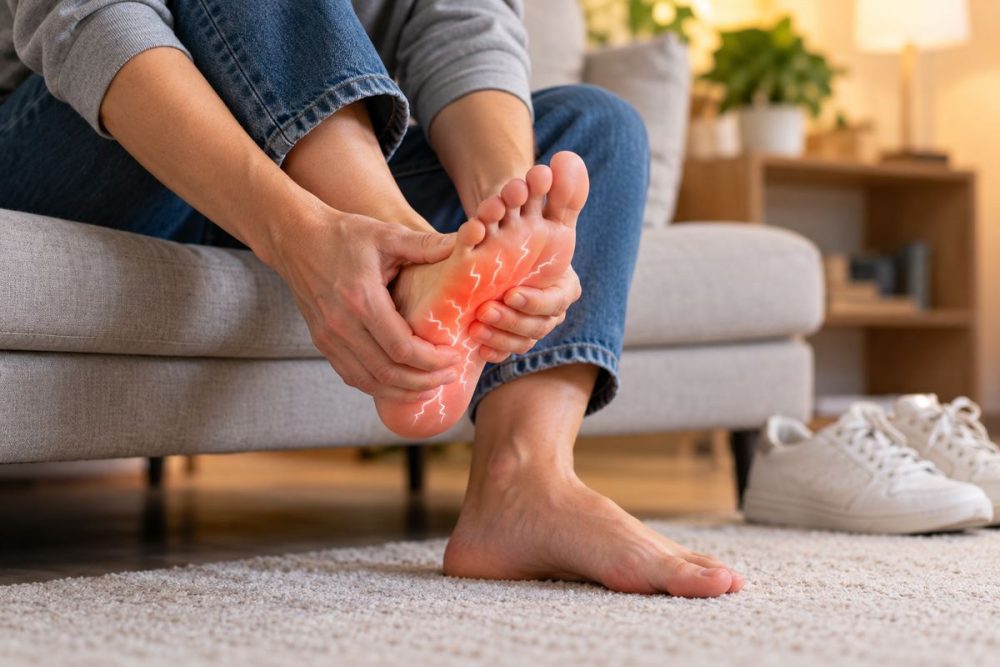
Pins and needles in the feet (paresthesia) is most often caused by temporary pressure on a nerve — sitting cross-legged, kneeling or wearing tight shoes — and it fades within minutes once you move. If the tingling keeps coming back, lasts for days or affects both feet, the most common causes are peripheral neuropathy (especially from diabetes), vitamin B12 deficiency, a trapped nerve such as sciatica or tarsal tunnel syndrome, poor circulation, heavy drinking, thyroid or kidney problems and some medicines. See a doctor for persistent or spreading tingling, numbness, burning or weakness, and seek emergency care for sudden one-sided numbness, rapidly rising weakness or a cold, pale foot.
That fizzing, prickling feeling is something almost everyone has felt after sitting awkwardly. Most of the time it means nothing. But when it lingers or returns night after night, it can be the first sign of nerve damage that is much easier to treat early. This guide explains what causes pins and needles in the feet, how to read the pattern of your symptoms, which tests a doctor will do, how it is treated and when it is an emergency. For tingling elsewhere in the body, see our broader guide to pins and needles in limbs.
What is pins and needles in the feet?
Doctors call it paresthesia — an abnormal sensation of tingling, prickling, buzzing, “electric” or crawling feelings without an obvious external cause. It happens when the nerves that carry sensation from the feet to the brain are compressed, irritated, poorly supplied with blood or damaged. Paresthesia can be:
- Temporary — caused by pressure on a nerve and gone within minutes;
- Recurring or chronic — a sign of an underlying condition affecting the nerves, spine, blood vessels or metabolism;
- Accompanied by other symptoms — numbness, burning, sharp or electric pains, sensitivity to touch, cramps or weakness.
Common causes of pins and needles in feet
| Cause | Typical pattern | Other clues | How common |
|---|---|---|---|
| Pressure or awkward position | One foot or leg, after sitting, kneeling, crossing legs | Goes in minutes when you move | Very common |
| Diabetic peripheral neuropathy | Both feet, starting in the toes, “stocking” distribution | Worse at night, burning, numbness, slow-healing sores | Very common in people with diabetes |
| Vitamin B12 deficiency | Feet and often hands | Tiredness, pale skin, memory problems, sore tongue | Common, especially over 60 |
| Sciatica (lumbar nerve root) | One foot and leg | Lower back or buttock pain shooting down the leg | Common |
| Tarsal tunnel syndrome | Inner ankle and sole | Worse after standing or walking | Less common |
| Morton’s neuroma | Between the 3rd and 4th toes | Feels like a pebble in your shoe | Common in women wearing narrow shoes |
| Peripheral artery disease | Feet and lower legs | Cold, pale feet; calf pain on walking that eases with rest | More common in smokers and over 50 |
| Alcohol-related neuropathy | Both feet | Long-term heavy drinking, poor diet | Less common |
| Underactive thyroid, kidney or liver disease | Both feet | Fatigue, weight change, swelling | Less common |
| Medication side effects | Both feet and hands | Some chemotherapy drugs, antibiotics, HIV and seizure medicines | Depends on treatment |
| Pregnancy | Feet and legs | Fluid retention and pressure on nerves | Common in later pregnancy |
| Multiple sclerosis or other neurological disease | Any pattern, may change | Vision problems, weakness, fatigue | Rare |
Temporary pins and needles: pressure on a nerve
When you sit on your foot, cross your legs or kneel for a long time, pressure briefly squeezes a nerve and its blood supply. When you move, the nerve “wakes up” and sends a burst of prickling signals — the classic dead-leg feeling. It is harmless and resolves within minutes. Tight shoes, socks with tight elastic and cold weather can trigger the same sensation.
Peripheral neuropathy and diabetes
Peripheral neuropathy means damage to the nerves outside the brain and spinal cord, and diabetes is the leading cause. High blood sugar over time damages the small nerves and blood vessels of the feet. Symptoms usually start in the toes of both feet and slowly move upward, which doctors describe as a “stocking” pattern. Tingling is often joined by burning, numbness, sharp pains and sensitivity to bedsheets, and symptoms are often worse at night. Because numb feet may not feel injuries, people with diabetes should check their feet daily and have a foot examination at least once a year.
Vitamin B12 and other deficiencies
Vitamin B12 is essential for healthy nerves. A deficiency can cause pins and needles in the feet and hands, along with tiredness, pale skin, a sore tongue, memory problems and unsteadiness. It is more common in older adults, vegans and vegetarians, people with digestive conditions and those who take metformin or acid-reducing medicines for a long time. Deficiencies of vitamin B1 and vitamin E can also damage nerves, while taking high doses of vitamin B6 for long periods can cause neuropathy.
Trapped or irritated nerves
- Sciatica — a slipped disc or narrowing in the lower spine can irritate a nerve root, causing tingling, numbness or pain that travels from the lower back or buttock down one leg into the foot.
- Tarsal tunnel syndrome — compression of the tibial nerve on the inner side of the ankle causes tingling and burning in the sole, often after standing or walking.
- Morton’s neuroma — a thickened nerve between the toes, usually the third and fourth, causes tingling, numbness or a burning “pebble in the shoe” feeling, worse in narrow or high-heeled shoes.
Poor circulation
Peripheral artery disease narrows the arteries in the legs. Feet may feel cold, look pale or bluish and tingle or go numb, and calf pain on walking that eases with rest is typical. It is more common in smokers and people with diabetes, high blood pressure or high cholesterol. A foot that suddenly becomes cold, pale and very painful is an emergency.
Other causes
- Alcohol — long-term heavy drinking damages nerves directly and through poor nutrition.
- Underactive thyroid (hypothyroidism) — can cause neuropathy and compression of nerves.
- Kidney or liver disease — toxins that build up in the blood can damage nerves.
- Medicines — some chemotherapy drugs, certain antibiotics, and medicines for HIV and epilepsy.
- Pregnancy — fluid retention and weight gain can press on nerves; our guide to leg pain during pregnancy covers related symptoms.
- Anxiety and hyperventilation — can cause short-lived tingling in hands, feet and around the mouth.
- Autoimmune and neurological conditions — such as multiple sclerosis, Guillain-Barré syndrome and vasculitis.
What the pattern of tingling can tell you
- Both feet, slowly spreading upward: suggests peripheral neuropathy — diabetes, B12 deficiency, alcohol, thyroid or kidney disease.
- One foot with back or buttock pain: points to a trapped nerve root (sciatica).
- Only between two toes: suggests Morton’s neuroma.
- Sole and inner ankle, worse on your feet: suggests tarsal tunnel syndrome.
- At night when lying down: common with neuropathy and restless legs syndrome.
- After sitting, gone when you move: harmless nerve compression.
- With cold, pale feet and calf pain on walking: suggests poor circulation.
When to worry: red flags
Call emergency services immediately if tingling or numbness comes on suddenly on one side of the body, especially with facial drooping, arm weakness or speech difficulty (possible stroke); if weakness spreads quickly up both legs (possible Guillain-Barré syndrome); if numbness in the feet comes with loss of bladder or bowel control or numbness around the genitals and buttocks (possible cauda equina syndrome); or if a foot suddenly becomes cold, pale or blue and very painful.
How doctors diagnose the cause
- History and examination — when the tingling started, its pattern, medical conditions, alcohol use, medicines and diet; the doctor checks sensation, reflexes, strength, balance and foot pulses.
- Monofilament and vibration tests — simple bedside tests for nerve damage in the feet.
- Blood tests — blood sugar and HbA1c, vitamin B12 and folate, thyroid function, kidney and liver function, full blood count.
- Nerve conduction studies and electromyography (EMG) — measure how well nerves and muscles are working.
- Imaging — an MRI of the spine if a trapped nerve root is suspected, or ultrasound of a neuroma or blood vessels.
- Ankle-brachial index — compares blood pressure in the ankle and arm to check circulation.
Treatment depends on the cause
| Cause | Typical treatment |
|---|---|
| Pressure, posture | Change position, move, loosen shoes — no treatment needed |
| Diabetic neuropathy | Blood sugar control, daily foot care, medicines for nerve pain |
| Vitamin B12 deficiency | B12 tablets or injections, treating the cause of low absorption |
| Sciatica | Physiotherapy, exercise, pain relief; injections or surgery for severe cases |
| Tarsal tunnel, Morton’s neuroma | Wider shoes, insoles, rest, injections; surgery if persistent |
| Peripheral artery disease | Stopping smoking, walking programmes, medicines, sometimes procedures to restore blood flow |
| Alcohol-related neuropathy | Stopping alcohol, nutritional support including B vitamins |
| Thyroid, kidney disease | Treating the underlying condition |
| Medication side effects | Reviewing the dose or switching medicine with your doctor |
How to relieve pins and needles in feet at home
- Change position and walk around — pressure-related tingling usually settles within minutes.
- Flex, point and circle your feet and ankles to improve blood flow.
- Wear wide, comfortable shoes with good support and avoid tight socks.
- Avoid sitting cross-legged or kneeling for long periods; take short breaks from sitting.
- A warm (not hot) foot bath can ease discomfort — test the temperature with your elbow if your feet feel numb.
- Limit alcohol and stop smoking to protect nerves and blood vessels.
- Do not start high-dose vitamin supplements without a blood test and medical advice.
Prevention and foot care
- If you have diabetes, keep blood sugar in your target range and check your feet every day for cuts, blisters and colour changes.
- Eat a balanced diet with sources of vitamin B12 (fish, meat, eggs, dairy or fortified foods for vegans).
- Stay active — regular walking improves circulation and nerve health.
- Keep a healthy weight to reduce pressure on nerves and the spine.
- Have regular check-ups, including foot examinations, if you are at higher risk.
Frequently asked questions
What causes pins and needles in feet?
The most common cause is temporary pressure on a nerve — sitting cross-legged, kneeling or wearing tight shoes — which fades within minutes of moving. Persistent or recurring pins and needles are most often caused by peripheral neuropathy, especially from diabetes, as well as vitamin B12 deficiency, trapped nerves such as sciatica or tarsal tunnel syndrome, poor circulation, heavy alcohol use, an underactive thyroid, kidney disease or certain medicines.
When should I worry about pins and needles in my feet?
See a doctor if the tingling lasts more than a few days, keeps coming back, affects both feet and spreads upward, or comes with numbness, burning pain, weakness or balance problems — and always if you have diabetes. Seek emergency care for sudden numbness on one side of the body, weakness that rises up the legs, loss of bladder or bowel control, or a cold, pale and painful foot.
Why do I get pins and needles in my feet at night?
Nerve damage from neuropathy often feels worse at night, when there are fewer distractions and the feet are warm under the covers. Lying in one position can also press on nerves. Restless legs syndrome causes uncomfortable crawling sensations and an urge to move, mostly in the evening. If night-time tingling is regular, ask your doctor about blood tests for diabetes, vitamin B12 and thyroid function.
Can vitamin deficiency cause tingling in the feet?
Yes. Low vitamin B12 is a well-known cause of pins and needles in the feet and hands, and it is more common in older adults, vegans and people taking metformin or acid-reducing medicines for a long time. Deficiencies of vitamins B1, B6 and E can also affect nerves — though too much vitamin B6 from supplements can itself cause neuropathy.
How do I get rid of pins and needles in my feet quickly?
If it is caused by pressure, change position, stand up, walk around, flex and point your toes and gently move your ankles — the feeling usually fades within a few minutes. Loosen tight shoes or socks. If tingling returns often or lasts longer, the cause needs to be found and treated, as home remedies won’t fix nerve damage.
Can anxiety cause pins and needles in feet?
Anxiety and panic attacks can cause tingling, usually in the hands, feet and around the mouth, often because of fast breathing (hyperventilation). It typically settles as breathing slows. Tingling that persists outside of anxious moments should still be checked by a doctor.
Sources
- NHS. Information on pins and needles, peripheral neuropathy and when to get urgent help.
- National Institute of Neurological Disorders and Stroke (NINDS). Overview of peripheral neuropathy, its causes and diagnosis.
- American Diabetes Association. Guidance on diabetic neuropathy and daily foot care.
- Mayo Clinic. Clinical information on vitamin B12 deficiency, sciatica and tarsal tunnel syndrome.
- Cleveland Clinic. Patient guides on paresthesia, Morton’s neuroma and peripheral artery disease.
Medical disclaimer: This article is for informational purposes only and does not replace advice from a healthcare professional. Always consult a doctor about new, persistent or worsening symptoms.