
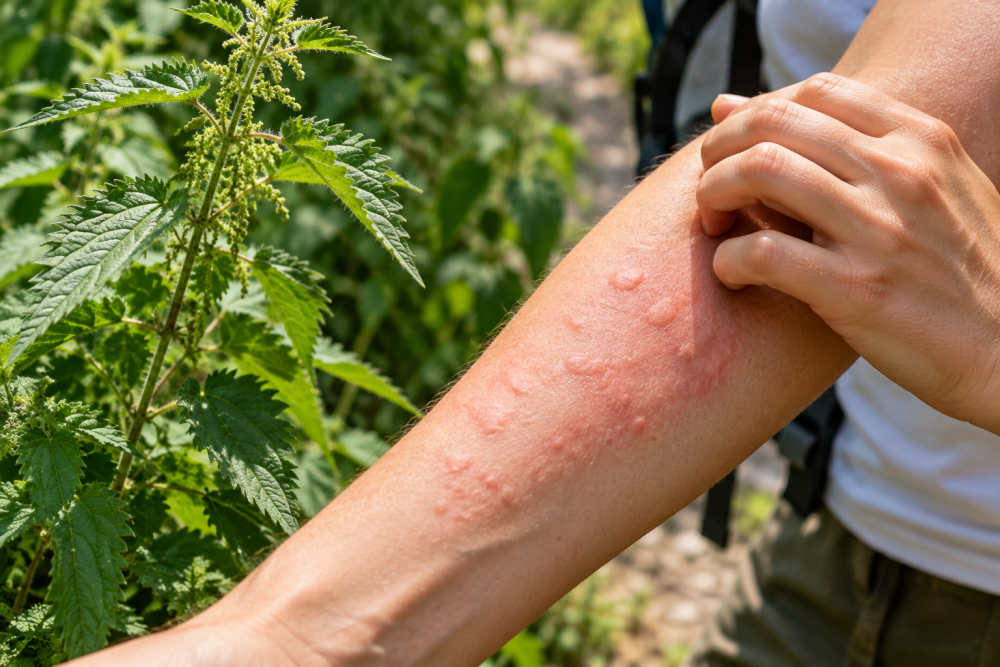
A nettle skin rash is a short-lived reaction caused when tiny hairs on stinging nettle leaves break against your skin and inject histamine, acetylcholine, serotonin and organic acids. It shows up within seconds as raised white or pale bumps on red skin that sting and burn, then itch, and usually fades within 24 hours. For quick relief, don’t rub the area for about 10 minutes, then wash it with soap and cool water, lift remaining hairs with sticky tape and apply a cool compress; calamine, 1% hydrocortisone cream or an oral antihistamine can calm itching. Get urgent help if you notice swelling of the face or throat or trouble breathing.
If you’ve brushed against nettles on a walk or while gardening, you’ll know the sting immediately. Below we explain what’s happening in your skin, the first-aid steps that actually work, how long the rash lasts, what “nettle rash” means when no nettles are involved, and when it’s time to see a doctor.
What causes a nettle rash?
Stinging nettle (Urtica dioica) is covered in hollow hairs with brittle, glass-like tips. When you touch the plant, the tips snap off and the hairs work like tiny needles, pushing a mix of chemicals into the top layer of skin. Histamine causes redness, swelling and itch, acetylcholine and serotonin add the burning sting, and organic acids are thought to explain why the ache can last for hours.
The rash is an irritant reaction, not usually an allergy, so almost everyone reacts to some degree. Children, people with sensitive skin and anyone with eczema often feel it more strongly.
Symptoms of a nettle sting rash
- raised white, pale pink or red bumps (wheals) where the plant touched;
- an immediate stinging or burning feeling;
- itching once the sting fades;
- tingling or mild numbness that can last a day or two;
- redness around the bumps, sometimes in lines that follow the leaves.
How to treat a nettle rash
- Don’t touch, rub or scratch the area for about 10 minutes, so the chemicals dry on the skin rather than spreading.
- Wash gently with mild soap and cool water to remove what’s left.
- Press sticky tape onto the skin and peel it off to lift any remaining hairs; wax hair-removal strips also work.
- Apply a cool compress or a wrapped ice pack for about 10 minutes, several times a day.
- For itching, apply calamine lotion or a 1% hydrocortisone cream, or take an oral antihistamine if it’s suitable for you.
- Aloe vera gel or a paste of baking soda and water can be soothing.
Which remedy helps with what?
| Remedy | Helps with | Note |
|---|---|---|
| Soap and cool water | Removing chemicals left on the skin | Do this first |
| Sticky tape | Removing broken hairs | Stops the sting from restarting |
| Cold compress | Burning and swelling | Never apply ice directly to skin |
| Calamine or aloe vera | Mild itch and heat | Safe for most people |
| 1% hydrocortisone cream | Itch and redness | Short-term use; ask a pharmacist for children |
| Oral antihistamine | Itching, widespread rash | Check it suits you and follow the label |
| Dock leaf | Distraction, cooling | No proven effect on the sting itself |
“Nettle rash” without nettles: hives
In everyday British English, “nettle rash” is also a common name for hives, or urticaria — itchy raised welts that look like nettle stings but can be triggered by food, medicines, infections, insect bites, heat, cold, pressure or stress. Hives that appear without contact with nettles, spread or keep returning for more than a few days deserve a doctor’s review. The NHS guide to hives explains common triggers. For skin changes that don’t itch, see our guide to red non-itchy patches on skin.
When to see a doctor
- swelling of the lips, tongue, face or throat, trouble breathing or swallowing, wheezing or dizziness — call emergency services;
- a rash over a large part of the body, especially in a young child;
- blisters, pus, spreading redness or fever, which may mean infection;
- symptoms that haven’t improved after a few days;
- hives that appear without touching nettles or keep coming back.
Nettle stings in children and pets
Children are stung most often because they play in long grass. Stay calm, follow the same first-aid steps and keep their nails short so scratching doesn’t break the skin. Ask a pharmacist before using hydrocortisone or antihistamines in young children. Dogs can also be stung, usually on the nose or paws; rinse the area and contact a vet if they seem distressed or swelling appears.
How to avoid nettle stings
- learn to recognize nettles: heart-shaped, saw-edged leaves covered in fine hairs, often in clumps near paths and hedges;
- wear long sleeves, trousers and gloves when gardening or walking through overgrown areas;
- cut back nettles in play areas wearing thick gloves;
- remember that dried and cooked nettles no longer sting — the hairs lose their effect.
Spending a lot of time outdoors? Our guide to sunburn skin blisters covers another common summer skin problem.
Common questions
What does a nettle rash look like?
A nettle rash usually appears within seconds as small, raised white or pale bumps (wheals) surrounded by red skin, exactly where the plant touched you. It stings or burns at first, then itches, and the area may feel tingly or slightly numb.
How long does a nettle rash last?
For most people the stinging fades within an hour and the bumps settle within 24 hours. Itching or tingling can linger for a day or two, especially after a large exposure or in sensitive skin.
What is the fastest way to treat a nettle sting?
Avoid rubbing for about 10 minutes, then wash the area with soap and cool water, lift any remaining hairs with sticky tape and apply a cool compress. Calamine lotion, 1% hydrocortisone cream or an oral antihistamine can ease itching if needed.
Do dock leaves really help with nettle stings?
There’s no scientific evidence that dock leaves neutralize nettle chemicals. Rubbing a cool, moist leaf may feel soothing and distract from the sting, but washing the skin and applying a cold compress work better.
Is “nettle rash” the same as hives?
In everyday British English, “nettle rash” is also another name for hives (urticaria) from any cause — food, medicines, infections, heat or stress — because it looks like nettle stings. If you have hives without touching nettles, or they keep coming back, see a doctor.
When is a nettle rash an emergency?
Call emergency services if there’s swelling of the lips, tongue, face or throat, difficulty breathing or swallowing, wheezing, dizziness or fainting after contact with nettles. These are signs of a serious allergic reaction.
Sources
- NHS — Hives (urticaria)
- American Academy of Dermatology — treating itchy skin
- Cleveland Clinic — contact dermatitis and plant rashes
This article is for general information and isn’t a substitute for medical advice.